
The Telecalculograph Mark 2

Mr Gazongola writes:

Yes, Jake of all Trades is at it again. With the release of the computer game Damnation, he was commissioned to create a computer to be given away to a winner of the competition held by Destructoid. It weighs nearly a metric tonne, and is full of wood and brassy goodness.
It sports an Intel Core i7 965, 12 gigs DDR3 RAM, an X57 chipset motherboard, a Dual Radeon 4870X2 card, and 1 Terabyte of hard drive.
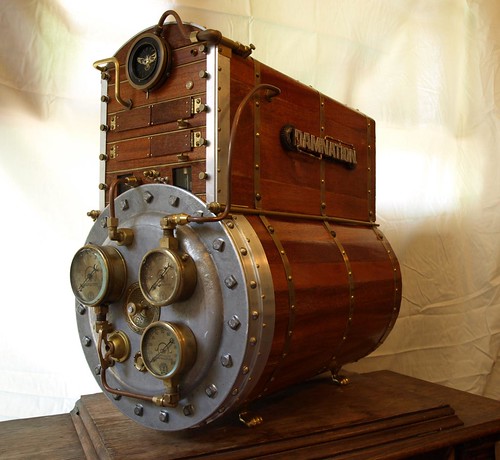
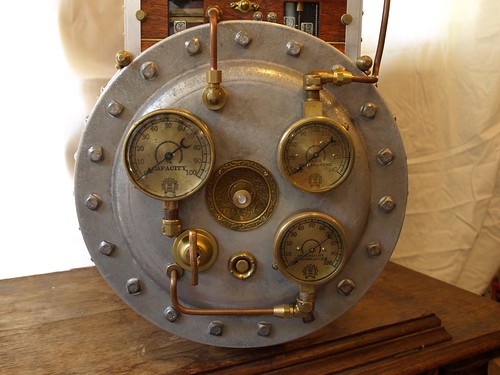


You too can enter the competition to win this fantastic device. Just post a picture of you in your best steamy outfit, with the destructoid.com logo. Unfortunately, due to its weight, the competition is only open to US and Canadian residents (spifflication!).

Show Us Your Loive Of Steam Punk And Win This Custom PC

  • Oskar
    It's beautiful! Basically my dream-computer but in real. A shame I live in Sweden
  • Rowan
    Oskar, Jake posted on the forums saying they will post overseas now, if the winner pays for postage (which might be a lot, seeing as it is a wooden and brass case!).

    Once again Jake, I am floored by your design.
  • Now this is what a computer should look like.
    Great design Alistair
  • This craftsmanship is astounding. If I had the money, I would ask to commission Mr. Jake of All Trades to design the packaging for a CD I am working on. Of course, then I would have to being making music in the Steampunk genre...
  • Haudy Kazemi
    Have any steampunk computer (or other equipment) builders actually installed working gauges on their designs?

    For computer cases, like the one above, the pressure gauges could show things like power consumption, cpu usage, hard drive activity, etc. If instantaneous readings don't look realistic enough, use moving averages so that the pressure gauge readings increase and decrease more smoothly.

    The mechanism behind the gauges could be an analog electronic meter with pressure gauge cosmetics in the front. Parts scavenged from aftermarket gauges used by auto performance enthusiasts might be useful for this.

    Alternatively, real working pressure gauges could be used via the combination of a compressor and air release valve. Control the compressor and air release valve via software controlled on/off switches. A digital pressure sensor read by the software could calibrate the gauge, or for simplicity the gauge could be set via dead reckoning based on starting at 0 psi and monitoring compressor runtime. Accuracy drift in the dead reckoning system could be mitigated by periodically depressurizing the gauge completely and then refilling to the expected level. This system could get you authentic air release hissing sounds as the measured system load decreases.
  • The gauges on this PC do EXACTLY what you suggest, actually! Go here for details: http://www.destructoid.com/reminder-we-re-givin...
  • Haudy Kazemi
    Very cool. I had not seen the video where the working gauges were demonstrated before I made that post. Good work!
blog comments powered by Disqus